Friday, October 24, 2014

Before Things Go Out of Control

Solutions Consultant, Don Mast, talks about providing more safety in oil refineries across the country. One way to do this is through the tools Canary Labs provides:

With increased focus on the booming oil and gas industry by the media, the government, groups against anything gas, and health & safety industrial organizations, more needs to be done to prevent accidents upstream, midstream and downstream. 
Refineries convert raw materials into usable product.
Fact: Workers at American oil refineries die on the job about three times as often as their counterparts in other countries.  One example of this is Tesoro, a Washington state refinery that exploded in 2010, killing seven people.  Recently the U.S. Chemical Safety board who investigates our nation’s worst industrial accidents says, that on average, across the nation there’s a significant accident at an oil refinery once every three days.  Companies’ report all the time that they are missing data or chunks of time and when that data is gone, bad things can happen including injuries, downtime and massive fines.  With all the technology available, this can be reduced and prevented.  The answer is data.
Canary Labs, a leader in information solutions for the oil and gas industry, is working with global oil and gas companies, pipelines, drillers, and refining companies to protect workers and equipment, reduce production and exploration costs, improve process and production metrics while providing the data needed to drive crucial decisions before things at the job site go out of control.
Utilizing the latest technology, Canary Labs open, flexible and high performance enterprise software runs around the clock to monitor equipment and process metrics by collecting data via the Canary Historian and presenting both real-time and historical data trends, allowing operators to have a good understanding of the current plant / job site conditions.   Similarly, Canary Labs software tools provide operators access to invisible variables that are not easily detected; providing early warning alerts to problems that can be resolved before they become a disaster.  Solutions are deployed as a simple single site solution or as a complex distributed enterprise resource. 
Driving innovation in the data industry, Canary Labs technology allows operators to collect data from distributed or remote sites and safeguards that the data are sent to the historian in event of a communication outage.  Furthermore Canary’s Axiom trending solution, AxiomTrend, is an intuitive and easy to use data analysis tool. It visually transforms process data into knowledge. It empowers operators, engineers, and managers to stay connected while using a common analytical tool for viewing data anywhere at any time via mobile devices.  With increased scrutiny on the industry by governments and anti-gas groups, Canary Labs provides streamlined detailed reporting for regulatory compliance. 
“Canary Trending is an invaluable tool in our refinery. It runs around the clock, 24/7. Over the last 14+ years, Canary has provided quality products that utilize the latest technology.” Kevin Moran, System Engineer, Delaware City Refinery “As a trending tool, we like the flexibility in how it’s configured and the ease of use. Users can drag and drop to add trends to the chart and save charts for later recall. The speed is a big plus, allowing users to quickly scan and find historical data they want to see. Users can access overview charts and then quickly drill down to see detailed data. The user doesn’t have to be a genius to figure things out.”
Randy Walker, Control Systems Engineer says, “Canary is a valuable tool allowing us to graphically review archived data for maintenance issues and performance. Templates can be saved of commonly reviewed trends for quick future access. The export utility is used to generate viewed trends into reports for distribution. This trending software has proven to be a valuable asset in our day to day operations.” 
For nearly 30 years, Canary Labs has been a game-changer in the oil and gas, industrial automation, energy production and distribution sectors delivering world-class, real-time data historian and trending tools with a focus on safety and solutions.  

Friday, September 05, 2014


8 Reasons Big Data Projects Fail


Most companies remain on the big data sidelines too long, then fail. An iterative, start-small approach can help you avoid common pitfalls.
Big data is all the rage, and many organizations are hell bent on putting their data to use. Despite the big data hype, however, 92% of organizations are still stuck in neutral, either planning to get started "some day" or avoiding big data projects altogether. For those that do kick off big data projects, most fail, and frequently for the same reasons.
It doesn't have to be this way.
[Want more big data advice on staffing? Read Data Scientists: Stop Searching, Start Grooming. ]
The key to big data success is to take an iterative approach that relies on existing employees to start small and learn by failing early and often.
Herd mentality
Big data is a big deal. According to Gartner, 64% of organizations surveyed in 2013 had already purchased or were planning to invest in big data systems, compared with 58% of those surveyed in 2012. More and more companies are diving into their data, trying to put it to use to minimize customer churn, analyze financial risk, and improve the customer experience.
Of that 64%, 30% have already invested in big data technology, 19% plan to invest within the next year, and another 15% plan to invest within two years. Less than 8% of Gartner's 720 respondents, however, have actually deployed big data technology.
That's bad, but the reason for the failure to launch is worse: Most companies simply don't know what they're doing when it comes to big data.
It's no wonder that so many companies are spending a small fortune to recruit and hire data scientists, with salaries currently averaging $123,000.
8 ways to fail
Because so many organizations are flying blind with their data, they stumble in predictable ways (including thinking that a data scientist will magically solve all their problems, but more on that below). Gartner's Svetlana Sicular has catalogued eight common causes of big data project failures, including:

Management resistance. Despite what data might tell us, Fortune Knowledge Group found that 62% of business leaders said they tend to trust their gut, and 61% said real-world insight tops hard analytics when making decisions.

Selecting the wrong uses. Companies either start with an overly ambitious project that they're not yet ready to tackle, or they attempt to solve big data problems using traditional data technologies. In either case, failure is the usual results.

Asking the wrong questions. Data science is a complex blend of domain knowledge (the deep understanding of banking, retail, or another industry); math and statistics expertise; and programming skills. Too many organizations hire data scientists who might be math and programming geniuses but who lack the most important component: domain knowledge. Sicular is right when she advises that it's best to look for data scientists from within, as "learning Hadoop is easier than learning the business."

Lacking the right skills. This one is closely related to "asking the wrong questions." Too many big data projects stall or fail due to the insufficient skills of those involved. Usually the people involved come from IT -- and those are not the people most qualified to ask the right questions of the data.

Unanticipated problems beyond big data technology. Analyzing data is just one component of a big data project. Being able to access and process the data is critical, but that can be thwarted by such things as network congestion, training of personnel, and more.

Disagreement on enterprise strategy. Big data projects succeed when they're not really isolated "projects" at all but rather core to how a company uses its data. The problem is exacerbated if different groups value cloud or other strategic priorities more highly than big data.

Big data silos. Big data vendors are fond of talking about "data lakes" and "data hubs," but the reality is that many businesses attempt to build the equivalent of data puddles, with sharp boundaries between the marketing data puddle, the manufacturing data puddle, and so on. Big data is more valuable to an organization if the walls between groups come down and their data flows together. Politics or policies often stymie this promise.

Problem avoidance. Sometimes we know or suspect the data will require us to take action that we don't really want to do, like the pharmaceutical industry not running sentiment analysis because it wants to avoid the subsequent legal obligation to report adverse side effects to the U.S. Food and Drug Administration.
Throughout this list, one common theme emerges: As much as we might want to focus on data, people keep getting in the way. As much as we might want to be ruled by data, people ultimately rule the big data process, including making the initial decisions as to which data to collect and keep, and which questions to ask of it.
Innovate by iterating
Because so many organizations seem hamstrung in their attempts to start a big data project, coupled with the likelihood that most big data projects will fail, it's imperative to take an iterative approach to big data. Rather than starting with a hefty payment to a consultant or vendor, organizations should look for ways to set their own employees free to experiment with data.
A "start small, fail fast" approach is made possible, in part, by the fact that nearly all significant big data technology is open source. What's more, many platforms are immediately and affordably accessible as cloud services, further lowering the bar to trial-and-error.
Big data is all about asking the right questions, which is why it's so important to rely on existing employees. But even with superior domain knowledge, organizations still will fail to collect the right data and they'll fail to ask pertinent questions at the start. Such failures should be expected and accepted.
The key is to use flexible, open-data infrastructure that allows an organization's employees to continually tweak their approach until their efforts bear real fruit. In this way, organizations can eliminate the fear and iterate toward effective use of big data.
When selecting servers to support analytics, consider data center capacity, storage, and computational intensity. Get the new Hadoop Hardware: One Size Doesn't Fit All issue of InformationWeek Tech Digest today (free registration required).
Matt Asay is Vice President of Community at MongoDB. He was previously VP of Business Development at Nodeable. You can reach him at mjasay@mac.com and follow him on Twitter @mjasay. View Full Bio

Wednesday, January 22, 2014

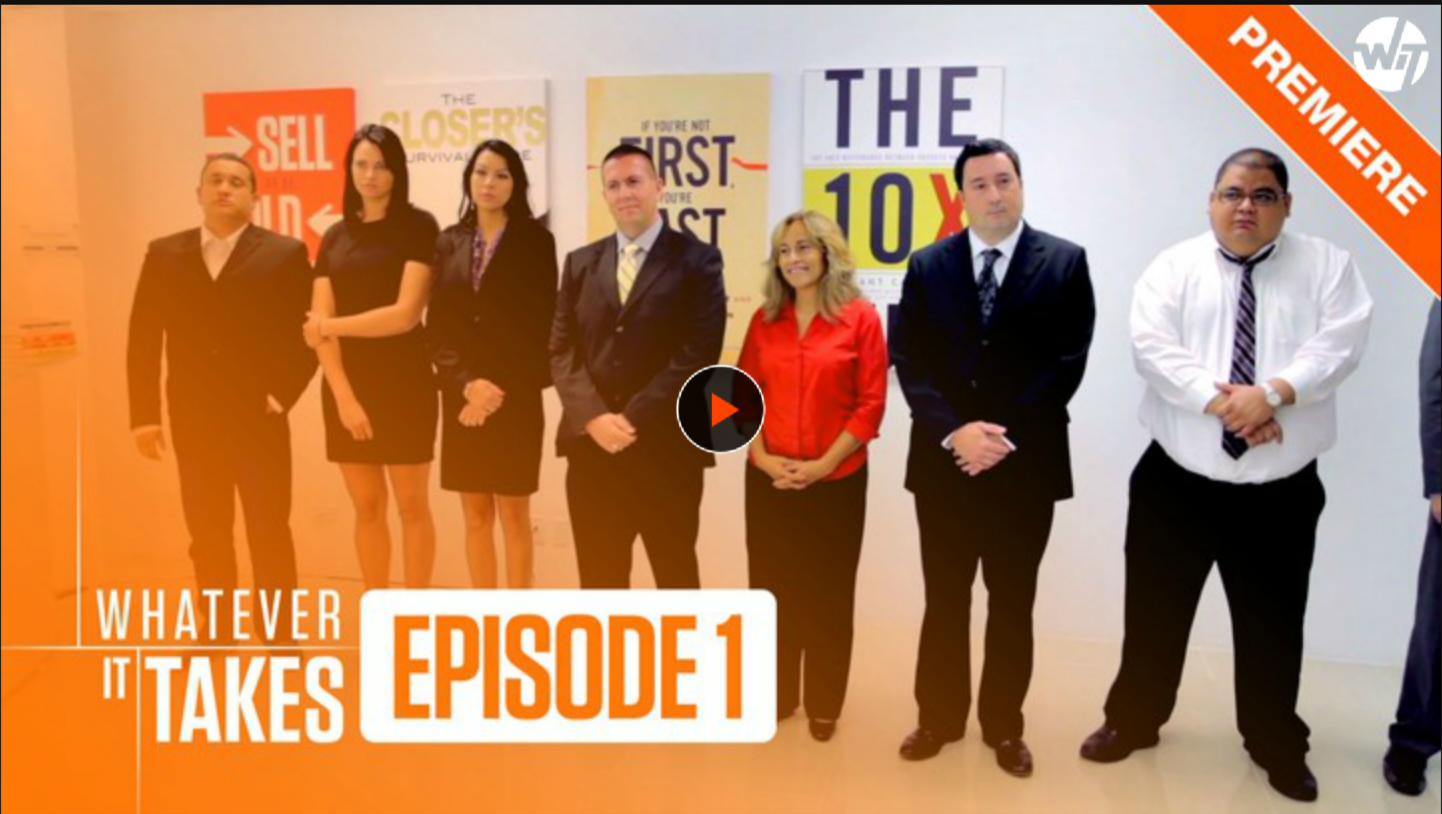
Whatever it Takes Reality TV Show Sizzle Reel with Grant Cardone


Grant Cardone also known for his business advice and reality tv show TurnAround king has produced and created a new reality show Whatever It Takes starring his wife Elena Cardone and his staff.

Cardone known for being for his uncoventional methodologies is using reality TV to hire employees. Grant Cardone is a NY Times Best selling author, international sales and business expert who writes for Entrepreneur Magazine, Business Insider and Wells Fargo. 

This show is a combination of Fear Factor, Undercover Boss, Apprentice, Punked The Profit and TurnAround King with a splash of Simon Cowell and Gordon Ramsey with the only difference that Cardone is giving real people real jobs.

Did you find me? Can't wait to watch! Blessed to be part of it! Fantastic experience. 

Must Read Article: Brand And Marketing Trends For 2014


By Robert Passikoff, Forbes Magazine


It was management consultant, Peter Drucker, who advised the best way to predict the future was to create it. Creating new things being difficult, the next best way is to have access to validated and predictive loyalty and emotional engagement metrics to help point the way. Happily, we do. And after examining over 100,000 consumer assessments, we’ve identified 14 critical trends to help marketers create their own, successful futures next year...

    Friday, January 03, 2014

    Great Business Reads To Get 2014 Started With A "BOOM!"


    1. Gary Vaynerchuk - Jab, Jab, Jab RIGHT HOOK 
    2. Marc Ecko - UNLABEL 
    3. Grant Cardone - The 10X Rule 

    I encourage you to read them all to help with finding your voice, success, failure, branding, sales, marketing, social media, motivaton, entrepreneurship and business start-ups.


    Thursday, October 31, 2013

    WHATEVER IT TAKES FILMING..


    My team during the filming of the cable reality TV show "Whatever It Takes!"

    Monday, September 23, 2013

    Costs of Billboard Advertising


    By Gaebler.com Staff Writer
    September 13, 2013

    How much does billboard advertising cost? Are the costs of billboard advertising worth the money? Using billboards to advertise your products and services might be a smart move, and billboard prices might be less than you think.

    Billboard advertising can be an effective and cost-efficient way for entrepreneurs to spread the word about their products and services. The Outdoor Advertising Association of America estimates that U.S. businesses spent more than $5.5 billion on outdoor advertising in 2003 and is anticipating a healthy increase in 2004. No matter how you slice it, billboard advertising is on the rise in America.

    There are a number of reasons for the recent surge in billboard advertising, not the least of which is cost efficiency. Compared to other forms of advertising, billboards are a relatively inexpensive way to get your point across to the general public.

    Consider this: A newspaper ad is only good for a day and a television commercial only lasts about thirty seconds. But a billboard ad is working for you twenty-four hours a day, seven days a week.

    The cost of billboard advertising ranges from about $700 to $2,500 a month. At that rate, ten billboards could run as much as $25,000 per month. That sounds like a lot of money, until you realize that a full-page ad running for one day in a major newspaper costs about the same.
    Advances in technology have also contributed to billboard advertising's cost efficiency. In the past, billboards had to be hand-painted - a time-consuming and costly venture. But with today's computer technology, billboards are designed on a computer screen, printed to vinyl or poster paper, and glued to the billboard structure. The result: Higher quality ads in less time for less money.

    Before you jump into billboard advertising for your business, there are a few things you need to understand.

    1. The amount of information contained in a billboard ad is limited. If you expect your billboard to convey as much information as a print ad - forget it. It's just not possible. Keep your ads short and catchy. When it comes to billboards think more visuals, fewer words.

    2. Billboards are effective, but they do have their limitations. For that reason, (and others), smart business owners view billboard advertising as one part of a balanced marketing strategy. An integrated marketing strategy involving print, broadcast media, and billboards is key for attracting and retaining new customers.

    3. Know your market. Since the majority of people who own automobiles are typically more affluent and mobile, billboard ads tend to target middle- to upper-income demographics. It also pays to be aware of the traffic patterns of your target customer base. This will be invaluable in helping you find the right placement for your business' billboard ads.

    For more information on billboard advertising in Pennsylvania, Call "The Billboard Guy", Don Mast (814) 660-2012 or email mast@84outdoor.com . 


    Wednesday, September 18, 2013

    For Rent Now! High-Traffic Pennsylvania Billboards - Cresson - Route 22


    Reach over 700,000 cars a month with this great 84 Outdoor billboard location. For Rent now! Cresson, Pennsylvania Route 22 East and West facings. Reach people driving between Altoona and Pittsburgh and everywhere in between. Call Me! "The Billboard Guy": 814-660-2012 or email: mast@84outdoor.com!

    Saturday, August 03, 2013

    Six Make it or Break it Rules for Billboard Advertising

    Billboard advertising is fun and effective – as long as you follow these six essential rules.
    Say It in Six Words or Less
    When it comes to billboard advertising, six words is the industry standard. Messages on billboards need to be as concise as possible, and anything longer than six words may start to be too much for drivers to take in as they quickly pass by. It can be very tough to come up with a clever, effective message that short, but it’s necessary for the success of your billboard campaign. The fewer words, the better, so shoot for less than six.
    Concentrate on Branding
    A billboard is most effective as a branding tool, and it’s much less effective when used as a tool to encourage direct response. Do not worry about adding your business’s phone number and web address to the billboard, because it won’t get much of a response. A billboard is an opportunity to show and build your brand. Unless the phone number or web address is the actual tagline of the billboard, it’s better to leave it off to avoid cluttering up the sign.
    Don’t Be Too Distracting
    Your billboard should catch the eye of passing drivers; it shouldn’t be so boring that it gets overlooked or isn’t noticed. It also, however, should not be so attention-grabbing that drivers become distracted. If it’s incredibly loud, shocking, demands a lot of attention, or tends to promote gawking, it might be too much as a billboard, and you should tone it down a bit.
    Don’t Be Too Confusing
    When people drive by billboards, they only have a few seconds to check it out and take in the message. This is why it’s so important to have a message that’s short but also very clear. It’s not a good idea to get so clever that people need to figure the message out. It should be obvious. An unclear, subtle message isn’t going to have effect you’re looking to achieve. The message on your billboard should be simple enough that everyone can get it with just one glance.
    The More Billboards, the Better
    In a high-traffic area, one billboard can reach thousands and thousands of people. If you can reach that many people with one billboard, consider how many you can reach with two, three, or more billboards. If you really want to build your brand, you should have several billboards to deliver your message. A widespread billboard campaign will make an impression. People who see several of your billboards are going to feel the impact of the message even more strongly.
    Show Something Cool
    Billboards that are done in 3D, have odd shapes, or use animation are always more memorable than traditional, flat billboards. A billboard is a visual medium, so get creative, and do something that will really stand out and look cool. And remember, doing something 3D isn’t in itself too distracting; it’s perfect. Just be sure to remember that as a whole your billboard should be clear.
    M.P. Brown is a sign light maintenance specialist and billboard designer. He works for Icon ID.

    Tuesday, July 16, 2013

    Do Billboards and Outdoor Advertising Still Work?


    Billboard advertising may seem outdated in this age of digital marketing coming at the consumer from every direction. Can billboards compete with more high tech forms of advertising?

    According to a study that was broken down by Forbes here it does work and is a very strong form of advertising. People spend an average of 20 hours a week in their car and travel 200 miles. During that time drivers are paying attention to what is around them…well hopefully! Some statistics from that study state drivers said they had:

    • Learned about an event they were interested in attending (58%)
    • Learned about a restaurant they later visited (58%)
    • Talked about something funny they saw (56%) on a roadside billboard
    • Been reminded to tune into a TV program (33%) or a radio station (44%)
    • Noted a phone number (26%) or Web site address (28%) written on an outdoor billboard
    Drivers are paying attention to and remembering large amounts of information every day from billboards, and while most of us cannot remember a phone number we can remember to look it up later. As far as buying and influence compared to a purchasing decision goes, there is a strong correlation between billboards and purchasing habits as well. The study says “billboard viewers make shopping decisions while in the car”:

    • 72% of billboard viewers frequently or sometimes shop on their way home from work
    • 68% frequently or sometimes make their shopping decisions while in the car
    • 38% make the decision to stop at the store while on their way home
    • 24% say they were motivated to visit a particular store that day because of an outdoor ad message
    • 32% visited the retailer they saw on a billboard later that week
    • 50% reported receiving directional information from a billboard
    • 24% said they have immediately visited a business because of an outdoor ad message
    Retailers that can target drivers with things they can pick up that day, so close to where they are now and have what they want to purchase can really benefit from using billboards. Just because billboards are not as flashy as internet advertising on television does not make them ineffective or outdated, it just means they are a different form of targeting consumers.

    Tuesday, June 25, 2013

    How to Get Everything You Want. Seriously

    You'd like to be successful in everything you do, of course. Here's how to make it happen.
     
    Getting what you want in your career and in life isn't as difficult as it may seem. I mean it.
    I've been very fortunate, both professionally and personally, and along the way learned seven key ways to help make it happen. In essence, I work to put others first, and to be more likeable, to end up with what I want in everything I do. I'll be writing about this in far more detail in my third book next year.

    In the meantime, here's a sneak peak at how you can be successful in everything you do, too:

    Listen First and Never Stop ListeningListening is the single-most important skill in professional and personal relationships. Ernest Hemingway said, "When people talk, listen completely. Most people never listen." It's sad, but true: Most people have their own agenda and are too busy talking (or waiting to talk) to listen to you. So here's the paradox: If you, unlike most people, can truly listen with empathy, then people will like you--and eventually help you get what you want.

    Help OthersIt's perhaps another paradox, but it works: When you want something from someone, instead of asking for it, help that person get what he or she wants. If you don't know what he or she wants, then simply ask, "How can I help you?" Since so many people are out to only help themselves, when you genuinely seek to help others succeed in their goals and dreams, you'll stand out. And those people you genuinely help will in turn fight to help you succeed and give you everything you want. Help others first, without expecting anything--and the returns will be enormous.

    Be Yourself: Authentic, Transparent, and VulnerableOprah Winfrey stated, "I had no idea that being your authentic self could make me as rich as I’ve become. If I had, I’d have done it a lot earlier." Professionals, especially of an older generation, tend to have a tough time with authenticity and transparency in the workplace. People, especially men, tend to have a tough time being vulnerable, especially with people they don't know well. Many also aren't sure how much to reveal online, or at work, or to people they've just met. But, hard as these choices may be, authenticity, transparency, and vulnerability all breed trust. And when people trust you, they'll do anything for you. Open up to people, and take a chance, and you'll be rewarded.

    Tell, Don't SellAs important as it is to listen and help others, in order to get what you want, eventually you've got to tell people what that is. But nobody wants to be sold to. So whether it's a product, service, idea, or yourself that you're trying to sell--give up on "selling." Instead, focus on telling a great story--captivating your audience, bringing to life what the future will bring, and painting a great picture of what will happen if you get what you want. When you get good at storytelling, people want to be part of that story--and they want to help others become part of that story too.

    Inject Passion Into Every InteractionPassion is contagious, but so is lack of passion. If you're not passionate about what you're talking about, why should someone else care? If you want something, you must be more excited and dedicated to it than anyone else. If you're not passionate about it, maybe it's not really that important to you. Not everyone is super high-energy and extraverted, though these qualities can help convey passion in many cases. Passion and energy alone put me through college with my first job. But ultimately, you don't need to be bouncing off the walls to convince someone of something. You just need to reveal your true passion, in the way that's genuine for you.

    Surprise and Delight OthersYou know how when you walk into a casino, there's always a slot machine going off somewhere in the background, telling the world that another person just hit a jackpot? This is what social psychologists call variable rewards. You don't know when you're going to win; you just have enough positive experiences that you feel excited, even when you're not winning. When you surprise and delight others, not only do you make them happy--you remind them that you're the type of person who might surprise and delight them soon again. Some classic examples: bringing home flowers to your wife for "no reason"; telling a customer his order will arrive next week but then overnighting it; and now, tweeting to a random prospect that she's won a free prize. If you go out of your way to make an experience with you special, especially when people least expect it, you will get huge results over time.

    Use The Four Most Important Words in Business and LifeSay "I'm sorry" when you make a mistake and "thank you" as much as you can. These words are so simple, yet so often people overlook the importance of saying them. Everyone makes mistakes, and everyone knows that. It's not when you make a mistake that's a problem; it's when you make a mistake and are too proud or embarrassed to be vulnerable, fess up, and apologize. Just say "I'm sorry" and let another person forgive you, so you can move on, and eventually get what you want. Conversely, sincere gratitude to people is a powerful emotion to convey, and opens up many doors. I send three hand-written thank you cards every morning. I send them to staff, customers, vendors, the media, and friends, and not only do I find people love receiving cards, but writing "thank you" puts me in an incredible mindset to start my day. This is not just about sending cards, though. It's about having a deep appreciation for and wonder about the people and world around you.
    Thank you for taking the time to read this. I'd love to know what you think of these seven ideas. Let me know in the comments section below.

    Thursday, June 13, 2013

    What do you fear?


    Tuesday, June 04, 2013

    Sales Expert Alert!


    Team, This week our Business Administration program has the honor to Skype with sales and motivational speaker Grant Cardone this Wednesday, June 3rd.

    The first session will start at 1pm EST, The second session will start at 5:40pm EST.

    About Grant Cardone

    Grant Cardone has been a sales training consultant for over 25 years working with a wide range of organizations including Google, Morgan Stanley, Toyota, GM, Nissan, Infiniti, Reinhardt, Carrier, and the US Army. He is also a NY Times best-selling author, executive producer of the reality TV business show Turnaround King, and the host of The Cardone Zone. In 2012, Cardone was named the Number 1 Sales Expert and Top 10 Business Coaches to follow on Twitter. He is a regular contributor to a wide variety of publications including Huffington Post, Entrepreneur, and Business Insider. Grant has written four books (Sell or Be Sold, The Closer's Survival Guide, If You're Not First You're Last, and The 10X Rule) since the 2008 financial crisis, providing principles, and techniques individuals must follow to flourish and win.
    www.GrantCardone.com - Follow him on Twitter: @GrantCardone

    Should be a rewarding experience for our students. If you need more info, shoot me an email.

    Don
    Don Mast
    Business Administration Instructor
    YTI Career Institute
    Office: Altoona Campus
    2900 Fairway Drive Altoona, PA 16602
    Direct Line: 814-944-5643 ext. 5708
    Fax: 814-944-5309
    twitter.com/LeaderAtWork
    Donald.Mast@yti.edu
    www.yti.edu


    Friday, May 24, 2013

    How to Prospect for New Customers

    A step-by-step approach for building up your sales pipeline.
    By SALES SOURCE   Geoffrey James   May 22, 2013
    Full Inc.com Story, Click Here!

    For most companies, the ability to find potential customers is the difference between growth and bankruptcy. Here's a systematic approach, loosely based upon a conversation with Thomas Ray Crowel, author of the excellent book Simple Selling.

    1. Get a decent list of prospects.

    Ideally, you want to be prospecting for customers who are already likely to buy. To do that, draw your list of prospects from the following sources in this order:

    1.Referrals. People whom your existing customers have contacted and suggested that they get in touch with you.

    2.Networks. People whom you've connected with personally at industry events or online via social networking.

    3.Website Visitors. People who've shown an interest in your offerings by accessing your website and leaving contact data.

    4.Purchased Lists. People who have the job title that typically buy your offering inside industries into which you typically sell.

    2. Create a qualifying script.

    Based upon your experience, define a conversational way to ask, during an initial conversation, whether or not the suspect has a budget, authority to spend the budget, and a need for your offering.

    In most cases, qualifying scripts are built around open-ended questions that you ask during the conversation. I've provided you with a list of these questions in my previous post "14 Ways to Qualify a Sales Lead."
    If you're calling somebody from a purchased list, you'll also want a basic cold-callings script. There's a good model for this in my previous post "A Cold Calling Script That Really Works."

    3. Set reasonable prospecting goals.

    Set a target for how many prospects you will need in your pipeline order to generate the number of sales that you need. For example, if you must generate five sales a week and on average close one out of fifty prospects, you will need to make 250 calls a week.

    Based upon how many of your prospecting calls "go through," estimate the amount of time it will take to make those calls, including the time that will be required to have a meaningful conversation once you've gotten into one.

    4. Get into a positive mental state.

    Find a place where you won't be interrupted or distracted. Take a few minutes to focus yourself and your thoughts:

    1.Be positive. Believe you will succeed. If you fail try again.

    2.Be optimistic. Look for the best in people and expect good things to happen.

    3.Visualize success. Imagine ALL the emotions you'll feel when you achieve your goal.

    5. Make the calls.

    'Nuff said.

    While doing so, remember to listen as much (or more) as you talk. According to Crowel, the most common prospecting mistake is failing to notice when prospect wants to buy right now. Listen for stuff like this:

    •"We've been looking to buy something like this."

    •"I was thinking of contacting your firm about this."

    •"Oh, yeah, we definitely need to talk."

    If you hear something like this, you can skip the script and jump right to the close.

    Geoffrey James writes the Sales Source column on Inc.com, the world's most visited sales-oriented blog. His newly published book is Business to Business Selling: Power Words and Strategies From the World's Top Sales Experts. @Sales_Source


    Wednesday, May 22, 2013

    A note from one of my students.


    It is all about passion! I am truly blessed and humbled by this email. It made me smile today!

    Monday, May 13, 2013

    7 Rules of Brilliant Marketing

    These marketing strategies and concepts can determine the ultimate success of your products, your company, even your career.

    Complete Story By: Steve Tobak, Inc. Magazine
     
     
    If you think marketing is all about B2B email, lead generation, social media, and advertising campaigns, then I seriously doubt if you'll make it in the business world. Savvy executives and business leaders get marketing. They know it's the key to business success.
    Steve Jobs certainly did.

    Sure, he was Apple's CEO, but more than anything, he was a consummate marketer. He understood that, more than anything, his job was to come up with products that people really wanted to use--even if they didn't know it themselves. He also knew that product developers live for that sort of thing.
    Indeed, Bill Davidow, a legendary Silicon Valley venture capitalist and former Intel executive said, "Marketing must invent complete products and drive them to commanding positions in defensible market segments." He should know. He wrote the seminal book on high-tech marketing.

    David Packard, the iconic co-founder of Hewlett Packard, took an even broader view of the significance of marketing when he famously said, "Marketing is too important to be left to the marketing department."

    Marketing and business are synonymous. Some of the most powerful business strategies and concepts come from marketing. And they can be applied to any individual, product, or company. Here are seven from my experience in the high-tech industry.

    You only need a focus group of one. If it's the right one. Crowd sourcing and collectivism may be popular these days, but business success is almost always the result of a simple idea by an individual or relatively small team. Apple's executives never used focus groups. They had themselves.

    The power of positioning. In a competitive market, you either differentiate or die. Of the relatively few things you can actually control, positioning strategy comes second only to the product itself. How you position yourself, your products, your company, is perhaps the most powerful and underutilized tool for differentiating anything.

    Control the message. In a world of information and communication overload, controlling the message--what you say and how you say it--is a lost art. If you can boil complex concepts down to simple messages and stories people can connect with, that makes all the difference. Not only does every word count, but so does how and when you say it.

    The customer is and has always been king. That doesn't mean you just do what they want. It means that you need to understand your audience, your customer base, and focus on giving them an experience with your company, its products and services, and its people, that will delight them and keep them coming back for more. In a world where just about everyone is focused on themselves, that's how you stand apart.

    You can't win without a defensible value proposition. If you can't articulate what you bring to the market that nobody else has or does better than you, you won't beat the competition. And that doesn't mean you can just BS. If it doesn't pass the smell test, if you can't say it with a straight face, if customers don't wholeheartedly agree that it's true, forget it.

    Brands still win. Bob Pittman has run everything from MTV and Nickelodeon to Century 21 and Six Flags. While he was president and COO of AOL--back when that meant something--he said this: "Coca Cola does not win the taste test. Microsoft does not have the best operating system. Brands win." Microsoft may not have the cache it did back then, but you know what he meant. Some say branding is dead. Don't believe it. Nothing's changed.

    Competitive markets are a zero sum game. It's a competitive world. It takes a lot to win. The equation that determines the success of your product, your company, even your career, has many variables. Business is all about how effectively you use and control those variables, many of which are described above. I guess there are other ways to win, but then, you're just making already tough odds a whole lot tougher.

    Steve Tobak is a management consultant, an executive coach, and a former senior executive of the technology industry. He's managing partner of Invisor Consulting, a Silicon Valley-based strategy consulting firm. Contact Tobak; follow him on Facebook, Twitter, or LinkedIn. @SteveTobak
     

    5 Lessons From Business Deals You Passed Up

    1. Assess Opportunities Quickly

    2. Money Is Different Than Revenue

    3. Money Deals Distract Your Company

    4. Debate the Assumptions, Not Partners

    5. You Can't Always Measure the Big Opportunity


    This post originally appeared on the American Express OPEN Forum, where Mashable regularly contributes articles about leveraging social media and technology in small business.


    Wednesday, May 01, 2013

    Steps to Close the Deal via Entrepreneur Magazine


    Steps to Close the Deal
    About The Entrepreneur Magazine Small Business Solutions Center
    Playing the game is one thing. Winning is another. In the real world of day-to-day business, sometimes you'll need quick-hitting, easy-to-follow advice.